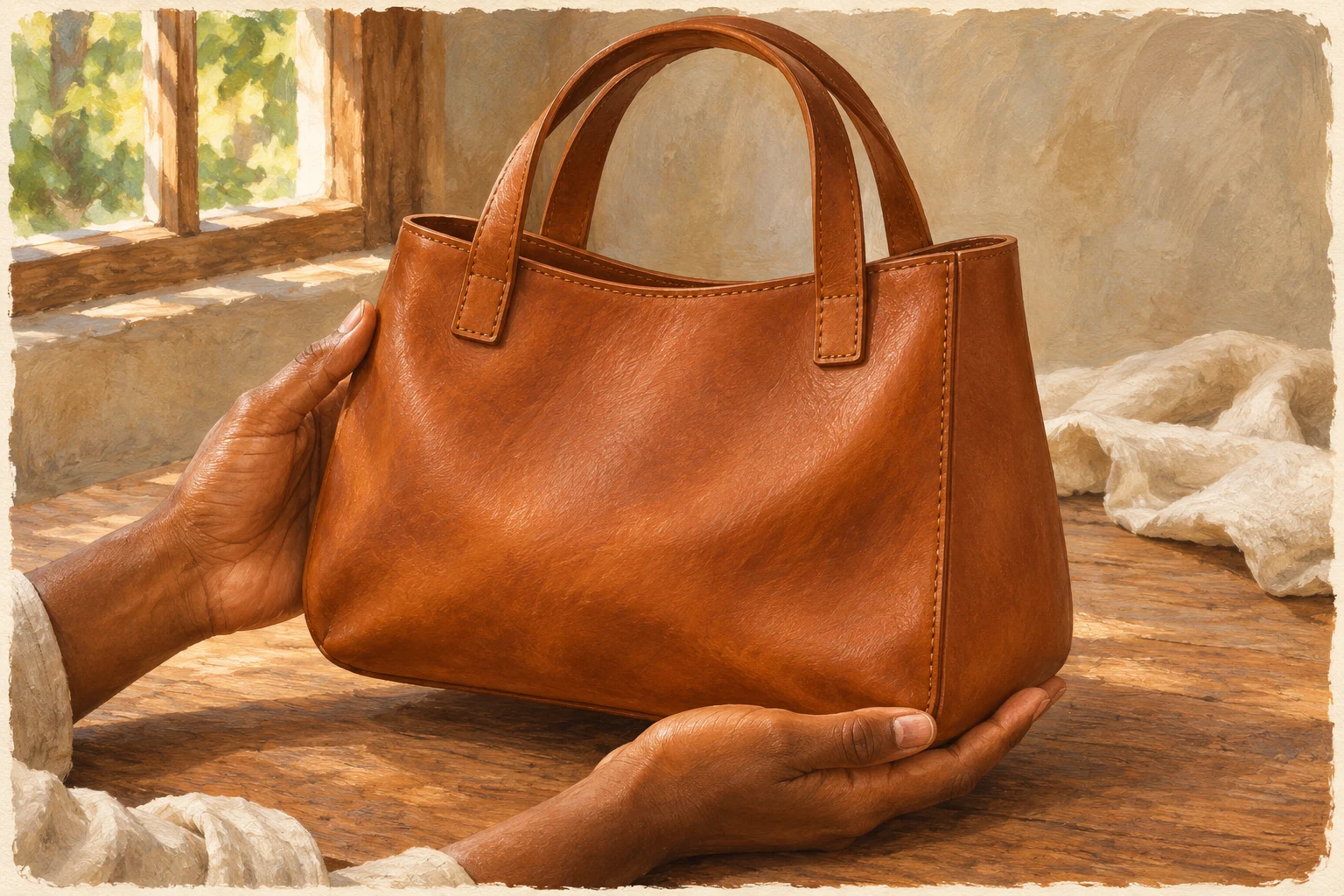
A leather bag can invite a quick decision about colour or style. A slower look reveals other choices: how the sides create depth, where a handle meets the body, how an opening closes and which parts have been joined. These details make a finished object a record of design decisions, rather than simply a piece of animal skin given a decorative finish.
Botswana's leatherworkers offer a good starting point for that way of looking. Published interviews describe people moving between household skills, formal learning, product design and teaching. For a visitor meeting makers through an arranged visit or a suitable craft outlet, the most interesting conversation may concern how an object works and how its maker learned to produce it.
Keep the maker's account attached to a name and time
In an April 2024 BOPA interview, Tumisang Ngwanathebe described a leatherworking background influenced by family skills and a business called Skin and Things Consultancy. She outlined a process involving an idea, material selection, pattern making, cutting and assembly. The account connects the finished product with a sequence of decisions and work.
That sequence is a useful framework for a conversation, without becoming a claim that every Botswana leatherworker uses identical methods. Ask the person presenting an object which parts they make, what materials they select and how a design develops. A direct explanation can distinguish a maker, a collaborator and a seller without requiring assumptions from the appearance of a stall.
Keep the date of a published profile in mind. An interview can introduce a person's work without establishing today's stock, address, teaching availability or production arrangements. Confirm any proposed encounter directly through the responsible host. A story about a workshop is not automatically an invitation to arrive there.
If a maker shares a personal history, ask before recording or publishing it. It is reasonable to learn how a skill developed while allowing the person to decide which details belong in a visitor's account. The object can become more meaningful without turning somebody's working day into a performance.
Distinguish the material before judging the finish
The Canadian Conservation Institute distinguishes rigid dried rawhide from softer, flexible semi-tanned material in its discussion of museum objects. That distinction is not a classification of a particular Botswana product. It demonstrates why materials made from skin should not all be assumed to have the same properties or treatment.
A useful question to a maker is therefore what the material actually is. Ask about the part you are looking at, including any lining, trim or contrasting panel. An object may bring several materials together, and a familiar word used in a sales description may not explain every component.
Look within the handling arrangements offered by the maker or outlet. You do not need to scratch a surface, pull at a seam or improvise a test to make an informed observation. A seller's permission to hold an object does not amount to permission to stress it. Discuss suitability for the intended use and request the maker's care advice for that specific item.
Treat colour as one part of the description. It can be visually important without proving the material's preparation, origin or expected life. If a claim matters to a purchase, ask for a clear explanation rather than turning an attractive appearance into evidence it cannot provide.
Read the relationship between pattern and volume
Ngwanathebe's description of pattern making and assembly draws attention to a transformation that can be easy to overlook: selected material becomes pieces, and those pieces are organised into an object. A flat view of a bag does not necessarily reveal the side, base or closure that gives it its usable form.
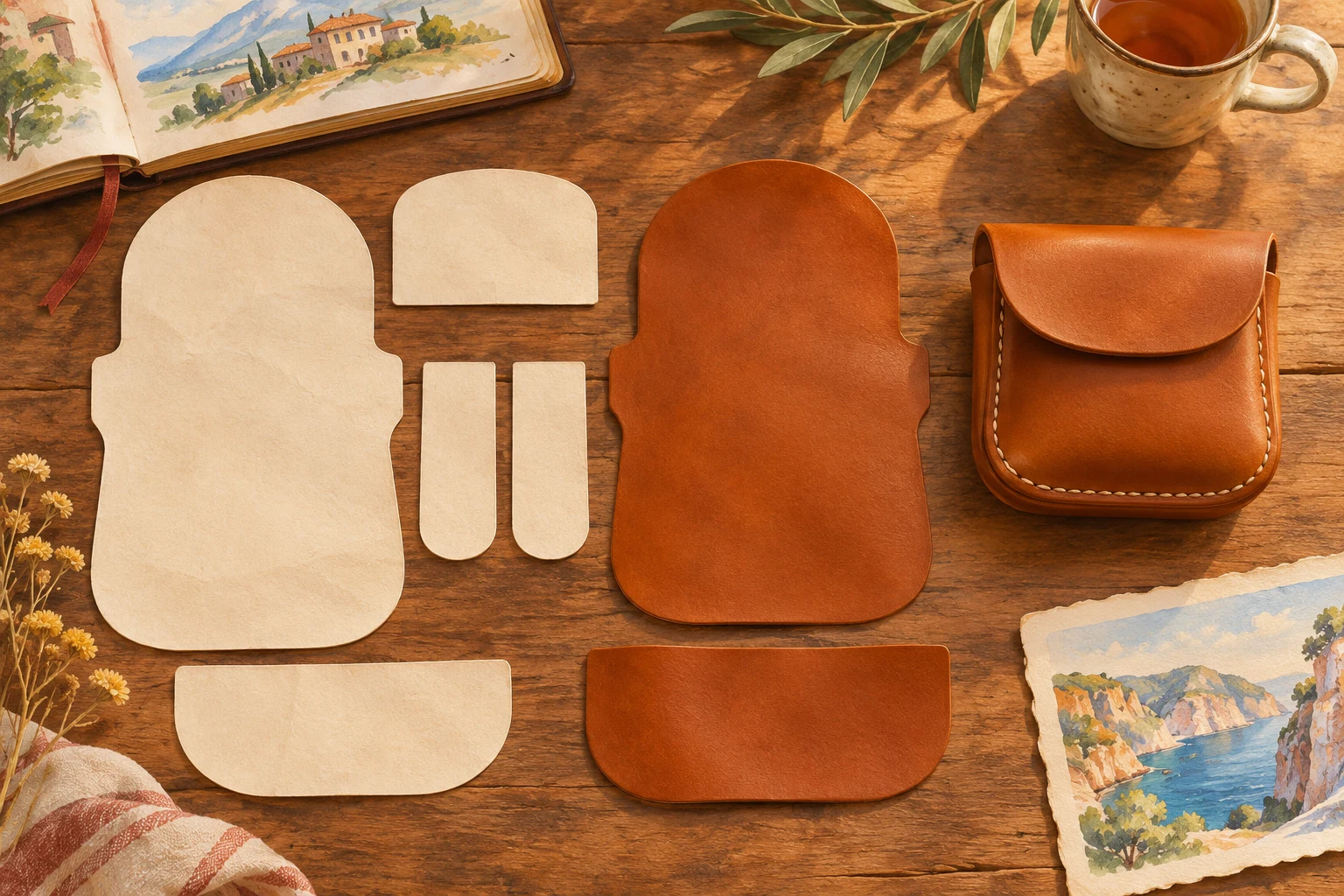
Begin with an ordinary question about use. What does the object need to contain, support or cover? Then notice how its parts respond. A narrow pouch and a deeper bag may need quite different arrangements, even if their front surfaces appear similar in a photograph. The interest is in the relationship between a design and the task it is intended to serve.
Ask about a feature that is genuinely visible. A side panel, fold or joining line can start a more useful conversation than a general request to explain the whole craft. Let the maker decide what can be demonstrated and what belongs to their own design knowledge. Learning to appreciate an object does not require obtaining its pattern.
This also changes a travel photograph. A permitted side view may communicate a feature that a straight-on image misses. Keep the maker's attribution with the photograph where appropriate, and avoid presenting an invented explanation of a join as though the maker supplied it.
Look beyond the bag to different kinds of use
A May 2026 BOPA interview with Maria Bothman in Serowe describes a range including pouches, belts, bags, sandals and other leather objects. It reports that she developed her skills through training at the Rural Industries Innovation Centre in Kanye. Her account places varied products within a working practice, rather than treating leathercraft as one fixed type of souvenir.
Bothman's interview also describes customers using work in settings such as cultural groups, schools and hospitality interiors. Those reported uses broaden the conversation beyond the object a visitor happens to want. A material can enter a wardrobe, a performance or a room, with different expectations in each setting.
Compare purposes before ranking objects by complexity. A restrained piece may answer a clear need, while a more elaborate item may be intended for display or a special occasion. Decoration alone does not explain the work involved, and simplicity should not be mistaken for the absence of design.
Keep an individual maker's account individual. A commissioned item does not become a universal traditional form because it is made in Botswana. Ask which parts are a new design, which respond to a client's request and which the maker identifies with an inherited practice. These distinctions allow contemporary creativity to remain visible.
Take home a usable understanding as well as an object
If purchasing, make sure the chosen piece suits the use you have in mind. Discuss how it should be carried or stored, which care instructions apply and what arrangements the seller actually offers. A dated profile cannot supply today's price or a promise about repairs, replacement or delivery.
It is equally possible to leave without buying and still have learned something specific. You might remember how one side panel created depth or how a maker distinguished two materials. A precise observation respects the work more than a vague declaration that everything on display was handmade in the same way.
Avoid turning a brief encounter into a verdict on the whole industry. A single shop or conversation cannot establish how every Botswana leatherworker sources materials or organises production. Attribute claims to the person making them, and allow space for different methods and circumstances.
The reward of looking closely is a richer account of an ordinary useful thing. Pattern, material, joins and purpose become connected with a named person's decisions and learning. Botswana leatherwork can then be remembered through the intelligence of its construction, as well as through the pleasure of choosing something to carry home.
Be the first to share a thought or travel tip.