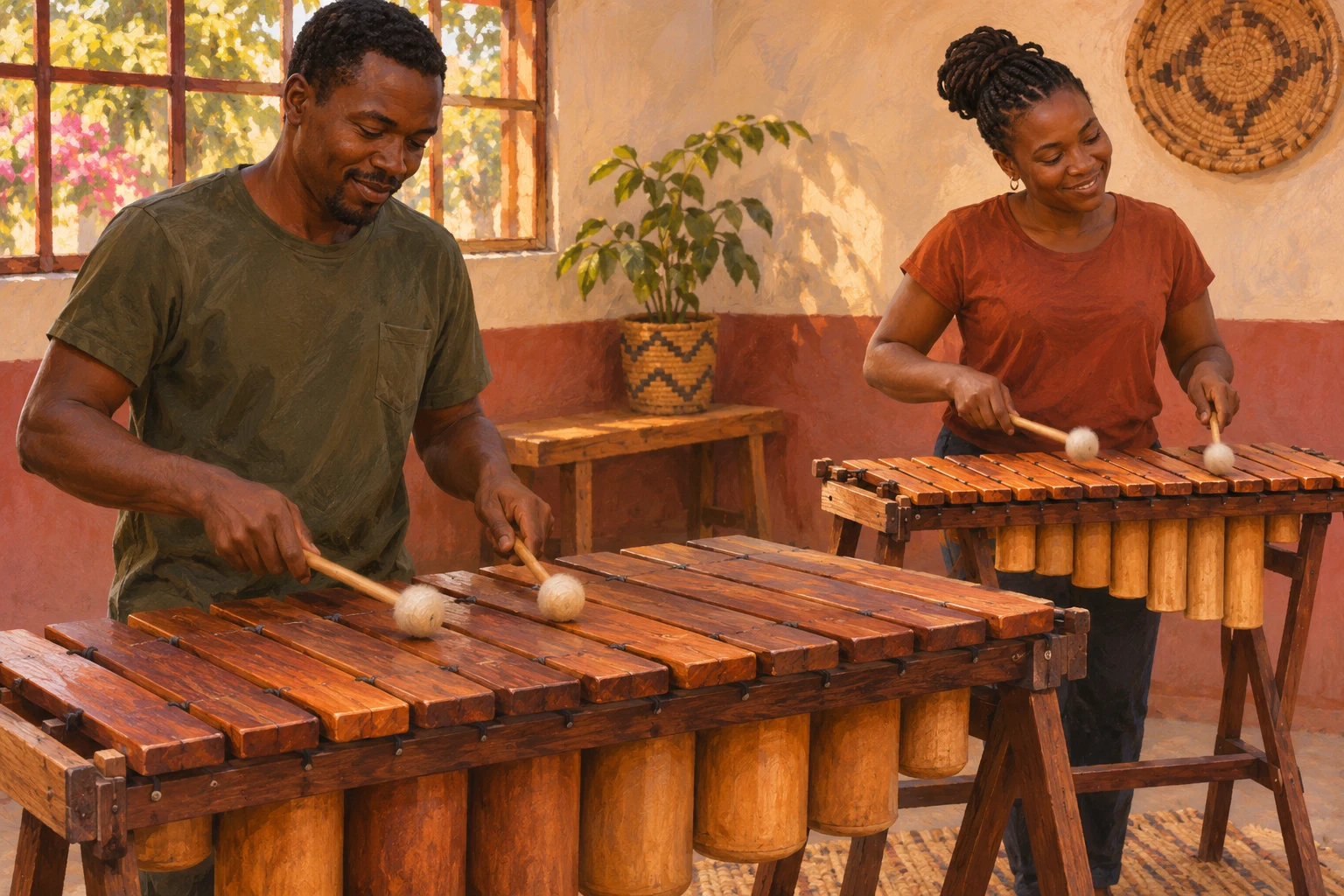
A marimba performance can catch the ear before the eye has worked out what each player is doing. Mallets move across wooden bars, a repeated figure continues and another part changes around it. Listening becomes more rewarding when the instrument is heard as both a sounding object and one voice within an ensemble.
Botswana's music stories provide particular examples of that relationship. Published interviews describe makers teaching instruments and groups developing from marimba performance into broader musical arrangements. These accounts are useful introductions to people and practices, rather than a promise that a particular band or lesson will be available during your journey. Begin with the music you are actually offered the opportunity to hear.
Distinguish a pitched instrument from a general rhythm section
Yamaha's instrument guide describes the marimba as pitched percussion: wooden tone plates produce notes when struck with mallets. In the modern instruments it discusses, lower notes use longer and wider bars. A row of different sizes therefore relates to musical pitch, rather than being merely an attractive graduation of wood.
If a host or performer identifies an instrument during a Botswana event, notice the relation between movement and sound. Can you follow a short sequence of notes as the player's hands travel? Does one small group of bars receive repeated attention? You can investigate those questions without knowing the name of every note.
Keep the manufacturer's general explanation separate from identification of an individual instrument. Designs vary, and a brief view does not establish a maker, tuning system or exact range. Ask how the musicians describe the instrument they are using rather than assigning a specification from a remembered photograph.
This is also a way to listen beyond a broad label such as traditional music. A pitched part can carry a tune, support another line or repeat a figure within a larger arrangement. The useful question is what it is doing in the performance before you, not which single role it must always have.
Hear the bar together with the space beneath it
Yamaha's explanation of modern resonator pipes describes a hollow space beneath a sounding bar, open towards the bar and closed at the far end. The resonating air contributes to the sound. Its account also relates effective pipe length to pitch, with lower notes using longer resonators.
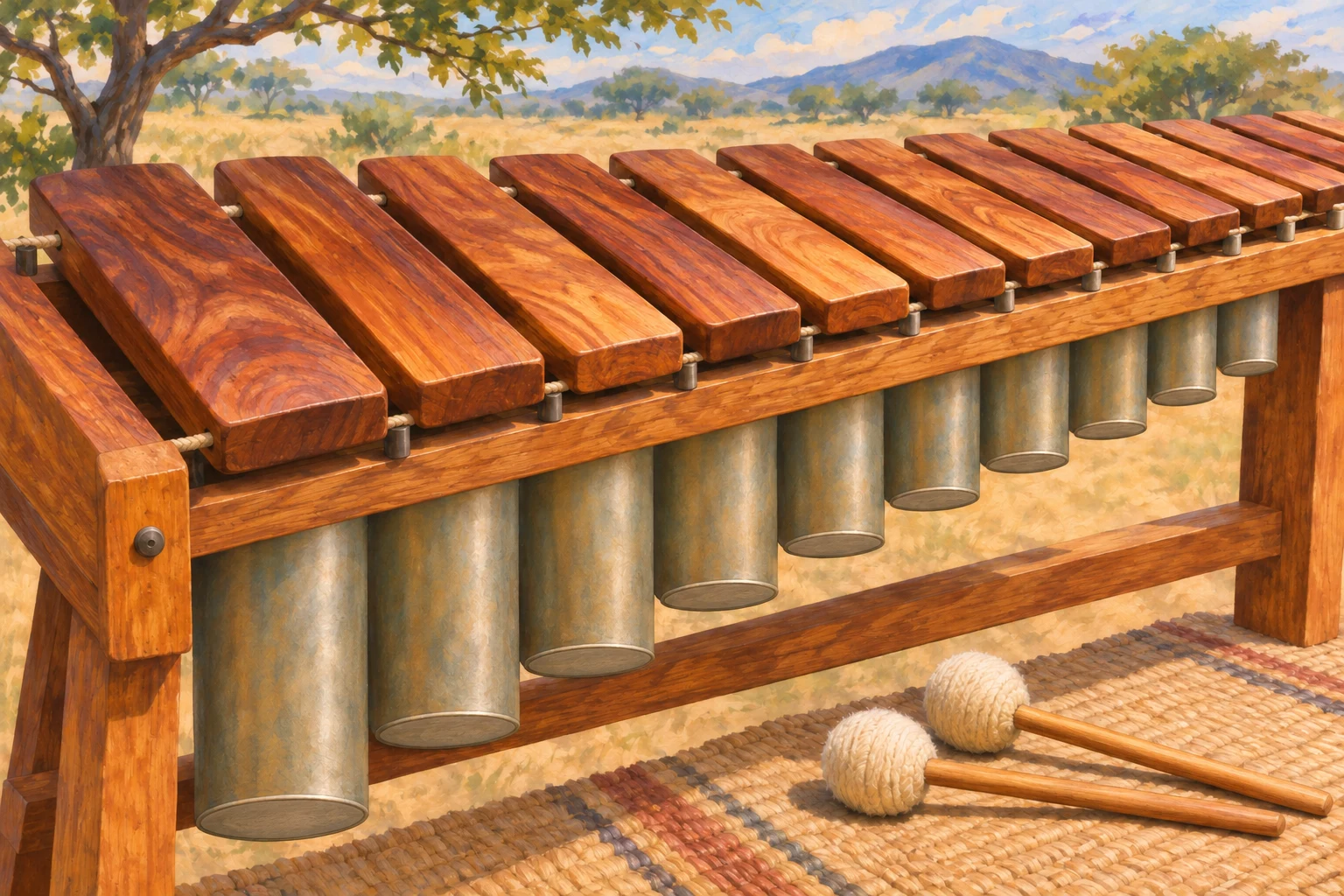
That relationship gives the eye another place to look when an instrument is appropriately visible. The row of bars and the structures below them belong to the same musical object. What appears at first to be supporting furniture may include parts relevant to how the notes sound.
Listen to the beginning and continuation of a note, while accepting that the room and the rest of the ensemble affect what reaches you. There is no need to turn the encounter into an acoustic experiment. Do not touch a resonator, move a component or ask a player to dismantle anything for a demonstration.
A conceptual explanation is enough to make an ordinary detail interesting. The important change is hearing more than the impact of a stick on wood. A bar and its resonating space work together, even when the details of the particular instrument remain something to ask its maker or performer about.
Give the mallet a part in the sound
The manufacturer's guide also describes mallets of different materials and shapes, including soft rubber and yarn-wrapped heads. The implement belongs within the explanation of the instrument, rather than being an interchangeable stick whose only purpose is to strike harder.
During a performance, notice what can actually be observed: which hands move, where a repeated pattern occurs and how the player returns to it. A change in sound may have several explanations. Avoid attributing every contrast to the mallet when a different bar, playing action or accompanying instrument could be involved.
If an introductory activity is offered and you have agreed to participate, follow the teacher's instructions for that instrument. Watching is also a complete form of participation. A cultural encounter does not require every visitor to take over a player's position or demonstrate a technique for a photograph.
Keep the distinction between appreciation and instruction. Understanding that materials and touch matter can deepen listening without making a short article a guide to playing, tuning or repairing a marimba. The musicians' own explanation should lead any practical encounter they choose to offer.
Follow a named route between making and teaching
A BOPA report from April 2016 records instrument maker Zachariah Mhaladi discussing marimba at a Thapong market day. He described an early interest through church in Mahalapye and further learning while at school in Zimbabwe. The account also connected his making practice with teaching. These are his reported experiences, not a universal origin story for marimba in Botswana.
The connection between making and teaching is worth noticing. A finished instrument is one result of work; helping another person learn to use it is another. An exhibition or performance may show one side of that relationship without revealing the other. Ask which part of a practice your host is presenting.
Keep the historical date attached to the account. A report of a workshop in 2016 does not establish present fees, staffing, stock or lesson availability. If you wish to arrange an encounter with a maker or teacher, seek a current agreement through an appropriate public contact rather than treating an old article as a booking confirmation.
Named accounts can also keep musical geography accurate. Learning across a border and practising in Botswana are compatible parts of one biography. There is no need to make the instruments of neighbouring countries interchangeable or to claim that a skill belongs exclusively to one place in order to appreciate a local musician's work.
Listen for the ensemble that a group has chosen to become
In a March 2024 BOPA interview, Mmabesi Live Band representative Keolopile Mafa described the group's development from marimba beginnings into an Afro-Jazz ensemble. The account presents a changing group and an interest in reaching audiences through music. It should not be read as a current roster or a guarantee of a particular programme.
That history offers a useful listening question: what role does a familiar sound take when other instruments and voices join it? Follow one part briefly, then widen your attention again. A repeated figure can be interesting on its own and acquire a different effect within the surrounding arrangement.
Avoid requiring a performance to sound unchanged in order to count as culturally meaningful. A group's choices can include new combinations, different audiences and influences learned elsewhere. Ask how the musicians describe those choices, allowing their account to be more specific than a visitor's expectation of one traditional sound.
If a suitable public performance forms part of your Botswana journey, confirm the actual event and respect its recording and audience arrangements. Leave with the name of a performer, a sound you noticed and a clearer sense of how the parts worked together. Marimba becomes more than an attractive instrument in a travel photograph: it becomes a way to hear material, skill and musical cooperation in the same moment.
Be the first to share a thought or travel tip.