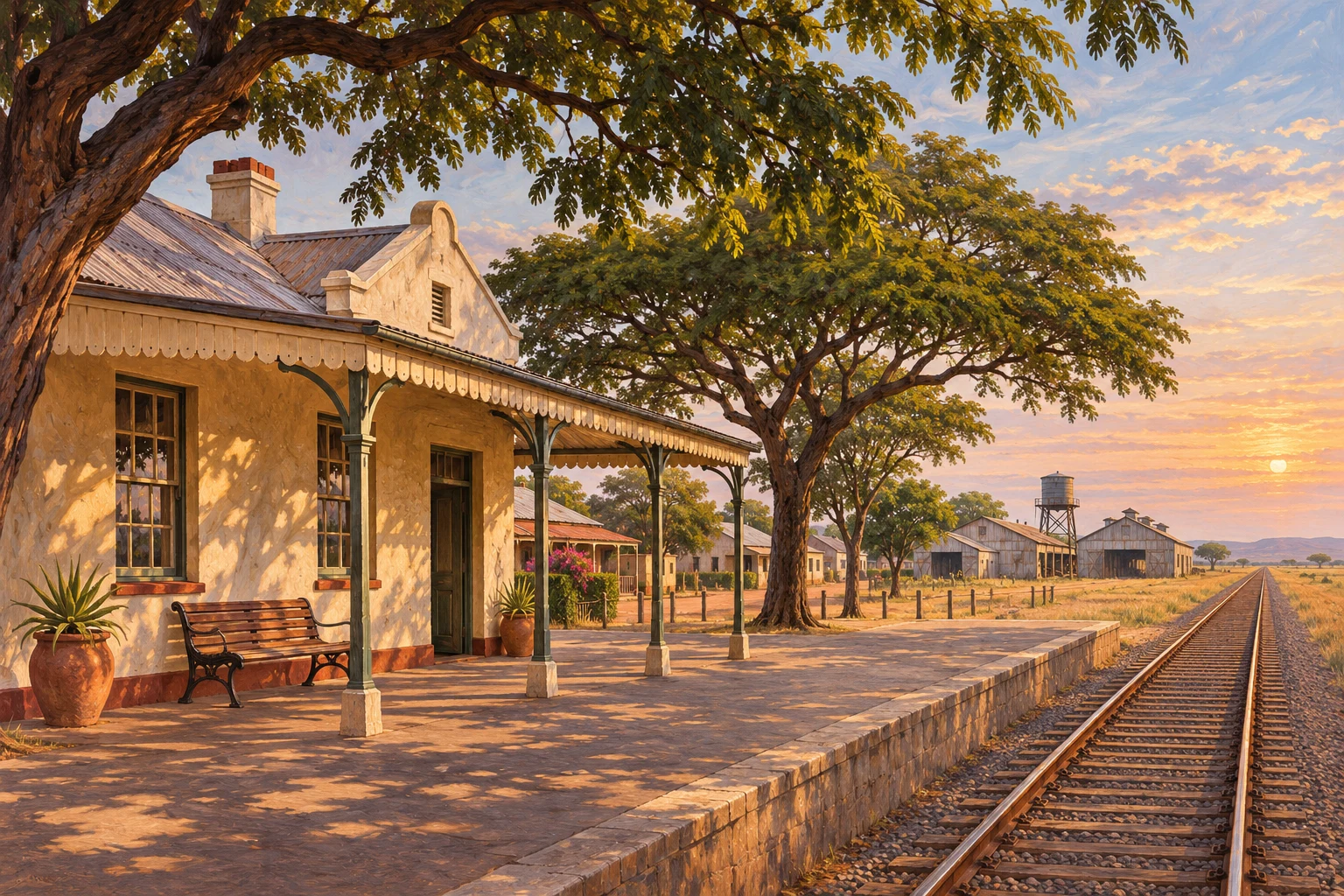
A railway story can begin with a locomotive and quickly become a story about everyone else. The person learning to drive, the clerk choosing a tariff book, the worker maintaining the track and the passenger waiting beside luggage all belong to the same transport system. Their experiences give Botswana's railway history a human scale that a photograph of an engine cannot provide alone.
This is a rewarding subject to carry into a Botswana journey, especially when passing through towns associated with the line. It does not require assuming that a passenger service is running or that a railway workplace offers tours. Begin with documented memories and local interpretation, then notice how movement, employment and community appear together in the account of a place.
Keep the railway's different periods distinct
Botswana Railways identifies 1987 as its establishment year and describes its role within southern Africa's connected rail systems. Its institutional profile gives particular attention to freight and bulk commodities. That places the familiar image of a passenger train within a wider transport story involving goods, neighbouring networks and specialised work.
Different names in an older person's account may therefore matter. A remembered employer, uniform or station routine belongs to a particular period. Preserve that context instead of replacing every historical railway name with the present organisation's name. A change in administration can sit within a person's working life without making all the surrounding conditions identical.
The distinction also helps when looking at an object in a heritage display. A carriage, ticket or photograph should have a date and an explanation of its connection with the place. Its presence in Botswana does not by itself establish when it was used, which service it belonged to or whether it represents everybody's experience.
Let the question be specific: what stage of the railway's history does this item or memory describe? A careful answer can connect a modest object to a much larger change without requiring a complete national chronology at every stop.
Give learning and repeated work their place
In a BOPA interview published in September 2016, driver Vivian Forbes recalled training in Lilongwe, followed by practical attachment and shunting duties. His working memories crossed Rhodesia Railways, National Railways of Zimbabwe and Botswana Railways. The account presents a career built through training and experience, rather than a driver simply appearing in a cab.
That changes the questions worth asking of a railway story. A vehicle is visible; the knowledge needed to use it may be less obvious. Training, practice and familiarity with a job's routines can disappear when an exhibit concentrates only on a machine's size or date of construction. Look for interpretation that makes those forms of work legible too.
Do not turn a historical account of training into present operating advice. Its value for a visitor is in understanding the depth of the occupation and the path an individual described. Current qualifications, staffing and procedures are separate matters for the railway to explain through its own appropriate channels.
The same care applies when listening to a personal recollection. Record the person's name and the period being discussed, with permission where you are speaking directly. A vivid memory can be valuable without becoming a claim that every worker followed the same route into the profession.
See tickets as evidence of work across borders
The same 2016 BOPA report records former ticket salesman Paul Motshwane remembering different tariff books as trains crossed borders, with currencies changing along the route. It is a small detail with a large implication: a passenger's journey depended on people translating a connected railway into the correct transaction.

A ticket can be read as more than a souvenir. Its place names, issuing organisation and date may connect it with a particular journey. A labelled display can explain what a category or mark meant. Avoid guessing from appearance alone, especially where an old place name or unfamiliar abbreviation needs historical context.
Paperwork also widens the cast of the railway story. Sales, costing and administration contribute to movement even though they do not provide the dramatic image of a train entering a station. Keeping them in view prevents the history from shrinking to the most photogenic occupation.
Historical currencies and tariffs should remain historical. An old fare cannot tell a traveller what a journey costs now, whether tickets are available or which documents a present border crossing requires. Enjoy the evidence of earlier travel while checking any actual travel plan separately with the relevant current authorities and operator.
Remember the railway beyond the platform
Botswana Railways' historical entry headed 1980 describes international assistance involving the Mahalapye locomotive and wagon workshops, signalling and telecommunications, and relaying the main line with continuously welded rail on concrete sleepers. It is an account of several kinds of infrastructure being developed together, rather than a story confined to purchasing trains.
A workshop, track and communications system each suggest different forms of skill. Thinking about their relationship helps explain why a railway town cannot be understood solely through its platform. The journey visible to a passenger depends on work undertaken elsewhere, much of it outside the visitor's view.
The operator's June 2017 farewell account adds named working lives. John Latolang's career moved through commercial, costing and management roles, while Judge Nkgwaphe's included field and track work. The account describes their retirement, not their current employment. Their different careers show why a railway's history needs more than one occupational viewpoint.
Look for that variety when reading a local display or speaking with an authorised interpreter. A chronological panel may tell you when an organisation changed; a worker's account may reveal what a particular job involved. Together they can make a transport corridor feel like a place of sustained human effort. Neither requires entering an active workshop or approaching railway equipment for a closer photograph.
Leave room for passengers, traders and ordinary waiting
Passenger Molaodi Maiketso's memory in the 2016 BOPA report includes people waiting with luggage in Francistown and food, craft and garment selling at Shashe station. These are recollections of social and commercial life around travel. They add another perspective alongside the accounts of employees.
Waiting can seem like empty time in an itinerary, yet it is often where a journey meets a town. The platform, surrounding businesses and people accompanying travellers may become central to what is remembered. A personal account can make those connections visible even when the buildings or services have subsequently changed.
Keep that distinction between memory and today's scene. Do not arrive expecting a remembered market, a particular kind of train or a public heritage programme to be operating. Confirm any proposed visit with its responsible host and observe railway boundaries. A station and a workshop can be important to a community without being open attractions.
Botswana's railway memories offer a fuller way to look at a transport landscape: through learning, paperwork, maintenance, commerce and the experience of travelling together. The engine remains interesting, but it no longer has to carry the entire story. Attention to the people around it allows a journey through Botswana to include the work that made earlier journeys possible.
Be the first to share a thought or travel tip.