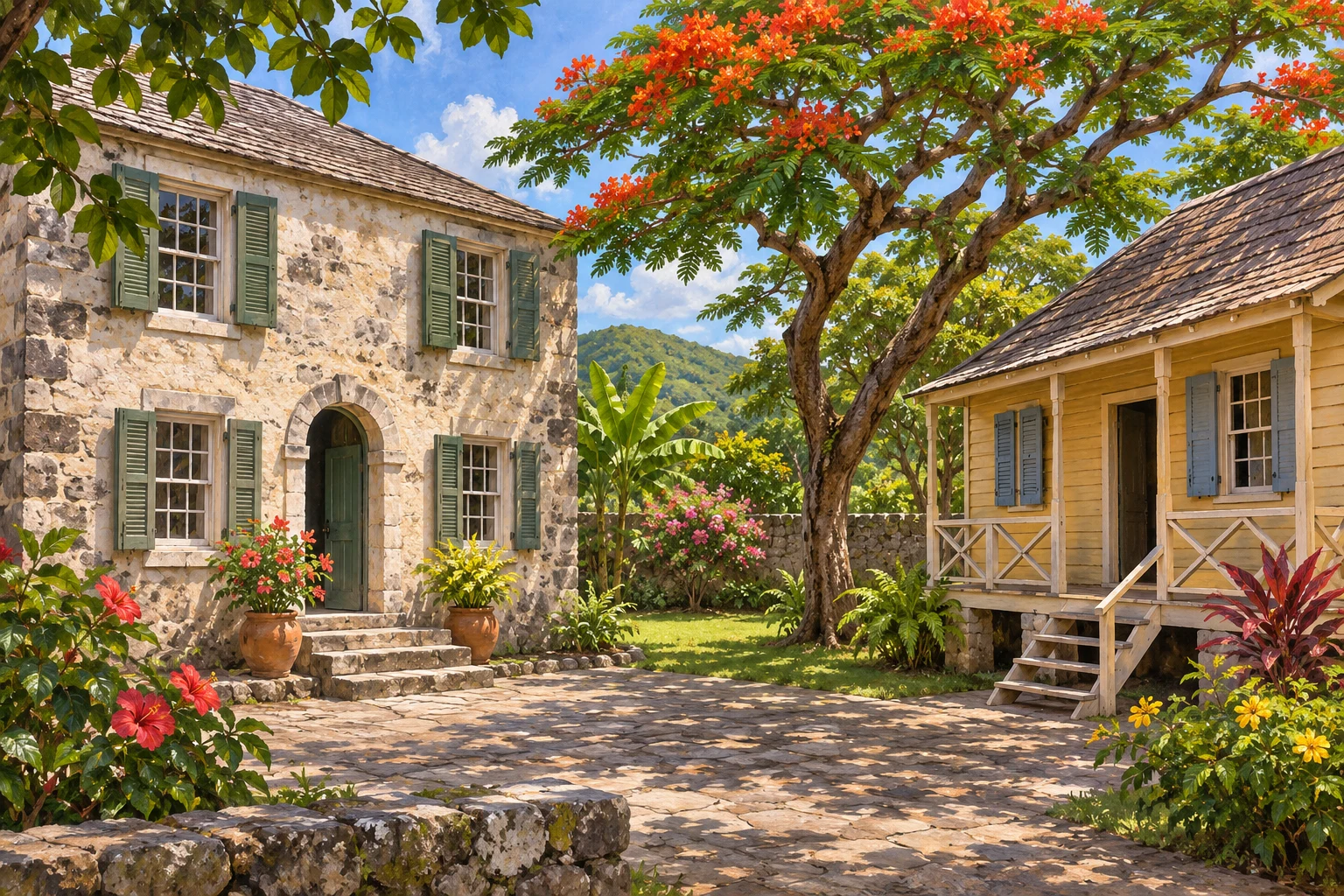
A famous name can make a small museum seem easy to understand before you arrive. In Charlestown, Nevis, Alexander Hamilton's association with the island is one reason visitors take an interest in a pair of heritage buildings. Yet the setting becomes more revealing when the questions widen: what does each exhibition explain, what happened to the buildings themselves, and which claims can the surviving evidence support?
For a traveller from Botswana including Nevis in a Caribbean journey, this is a useful purpose for a cultural stop. You can follow a well-known biography while allowing the island's longer history and the work of its custodians to remain visible. The visit need not depend on treating every attractive building as an unchanged witness to the event associated with it.
Give the island's history room beside the famous biography
The Nevis Historical and Conservation Society describes the Museum of Nevis History as covering the island's history through emancipation and independence, alongside African influences and stories of Nevisians. Its Hamilton exhibition, in Trott House, has a different focus. The two subjects are related without being identical.
Begin by recognising that difference in scale. A biography follows an individual through selected events; an island history brings together many lives, institutions and changes over time. If you arrive interested mainly in Hamilton, leave space for material that does not fit neatly into his story. That wider context can make the association with Nevis more meaningful.
Notice what an exhibition uses to move between those scales. A personal name may introduce one connection, while a timeline or object may point towards a larger social history. The interpretation can tell you whether the connection concerns residence, ancestry, work or a later act of commemoration. These relationships should not all become the same statement in a travel diary.
There is no need to finish every panel in one visit. Choose a thread you can follow carefully, then identify another subject worth learning about later. A modest museum stop can broaden an itinerary without becoming a claim to have mastered the history of the whole island.
Separate an island association from an exact birthplace claim
The society's account distinguishes scholarly acceptance that Hamilton was born on Nevis from proof about the particular plot now associated with the museums. It states that there is no documentary evidence establishing that this was his exact birthplace. That is a limit on a specific location claim, rather than a denial of his connection with the island.
A useful visitor response is to preserve the distinction. A place can be important in the history of remembrance even when a familiar label is more precise than the evidence allows. Ask what supports the particular claim being discussed: a surviving document, a later tradition, an old image or an interpretation assembled from several kinds of material.
This does not require treating every uncertain detail with suspicion. It means allowing different levels of confidence to coexist. An exhibition can offer a strong account of an island connection while leaving the exact site of an event unresolved. A careful description is more interesting than replacing one absolute claim with another.
Keep captions proportionate to what you learned. A photograph of a museum building records the building you visited. It does not by itself become a photograph of an unchanged room in which a famous person was born. The distinction can be made without diminishing the pleasure of the visit.
Read the buildings as things with histories of their own
The society explains that the stone building was reconstructed in the 1980s to accommodate a museum and the House of Assembly. Its account also describes restoration of the wooden Trott House, completed in 2018, and the Hamilton exhibition housed there. Reconstruction, restoration and the history represented inside are separate parts of the site's story.
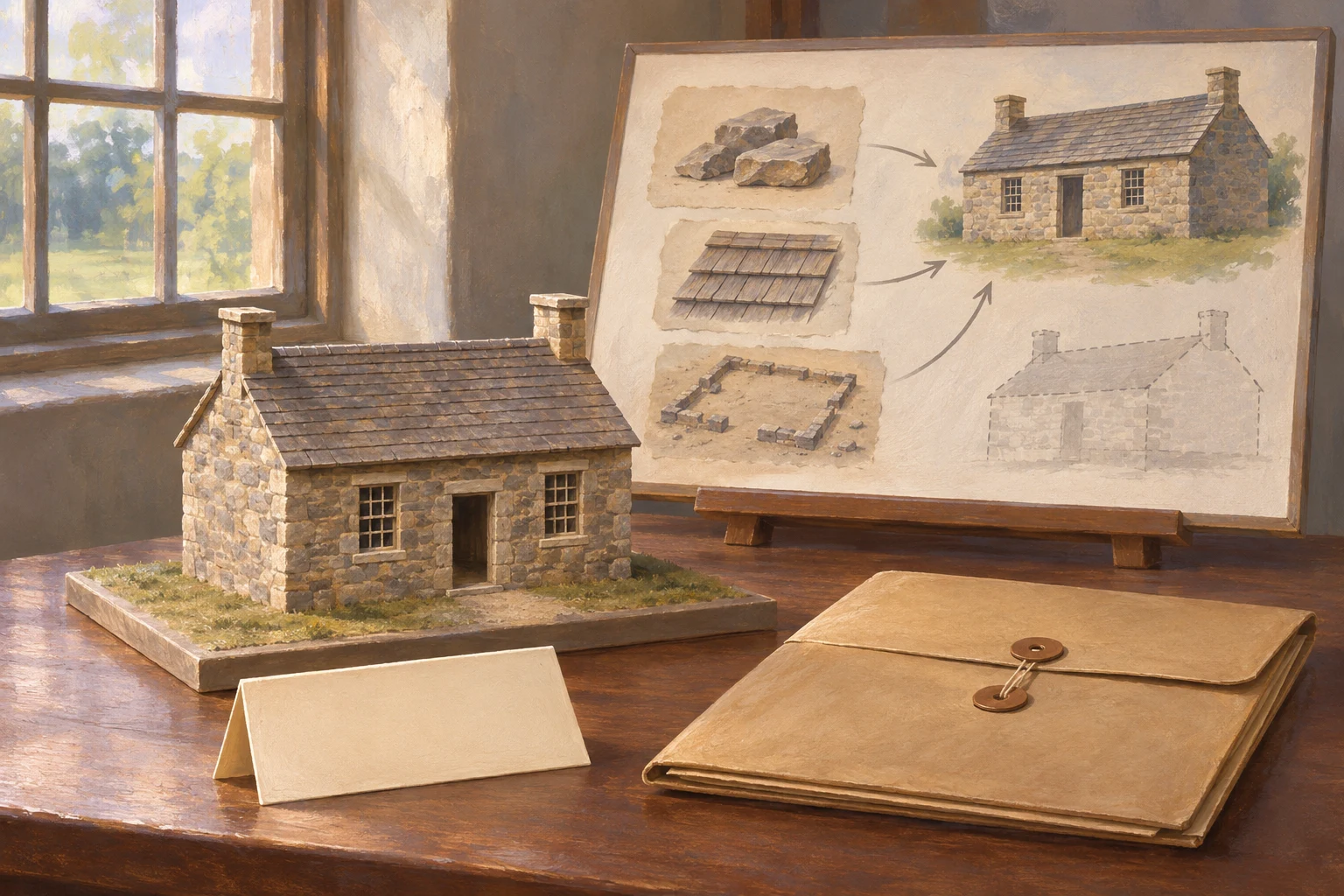
Look for the explanation attached to a building before imagining its earlier life. A reconstructed form may communicate an interpretation of the past, while surviving fabric may preserve evidence from a different period. An old-looking surface alone cannot establish which of those roles it serves.
The distinction is especially useful when looking at a model, drawing or historical photograph. Each records or proposes something different. A drawing can communicate an idea of how a building looked; a dated photograph shows a view at one moment; a model can make an interpretation easier to grasp. None should quietly inherit the status of all the others.
Let those differences add interest rather than turn the stop into a search for the one supposedly authentic object. The care taken to preserve, reconstruct or explain a place is itself part of its later history. A visitor can appreciate that work while remaining clear about what has and has not survived.
Remember that a museum display is not the whole archive
The Nevis Island Archives lists holdings including photographs, engravings, paintings, books and government records. The society also points to material digitised through partnerships. Those holdings provide a different kind of resource from a selected exhibition, with their own access and research arrangements.
This is a useful boundary for an ordinary visit. Reading a short panel does not mean examining all the records behind it, and seeing an archive mentioned online does not establish immediate access to original documents. If you have a particular research interest, ask the custodian about the appropriate process before building a travel day around it.
Keep a note of the question that interested you rather than trying to solve it by photographing every label. Was it a building's later use, a person's connection with the island or the evidence behind a familiar story? A precise question can guide further reading through authorised resources after the trip.
Likewise, do not assume that digitisation has made every holding available online. A selected digital group and a complete archive are different things. The society's own description can help identify where to begin without implying that a visitor has inspected collections that remain outside the public exhibition.
Plan a cultural stop with room for revision
The society places the history museum and Hamilton exhibition in Charlestown, while its archives are at Bellevue. Keep those locations distinct when making enquiries. A reference to the same organisation does not mean that all its work happens in the same building or can be included in one casual walk.
Confirm current opening arrangements, admission and any access needs directly before travelling specifically for the museums. Exhibition descriptions introduce subjects; they do not guarantee that every room or service is available at the time of your visit. A separate research appointment should remain separate from a general museum plan.
Leave time afterwards to think about one thing that changed your understanding. Perhaps the important difference was between an island association and an exact plot, or between a reconstructed building and the history it represents. A clear observation can make the stop more memorable than a rushed list of famous names.
Nevis offers a museum encounter in which biography, island history and the care of buildings meet. Following those relationships allows the Hamilton connection to become a beginning rather than a limit. You leave with a fuller sense of the place, and with a more accurate account of what its buildings and exhibitions helped you understand.
Be the first to share a thought or travel tip.