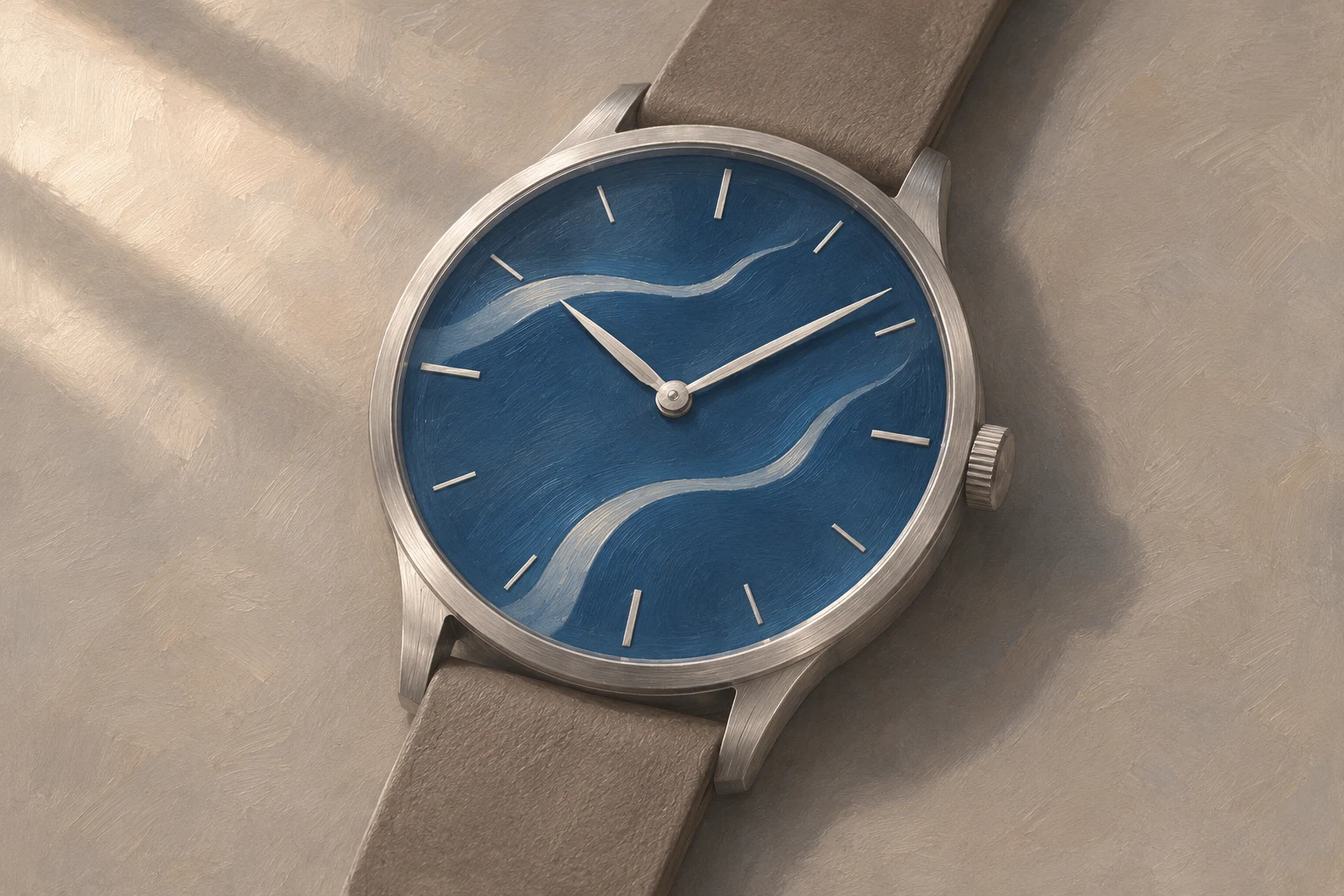
A journey can return home through a small object as well as a photograph. The interesting question is how a place becomes part of that object: through its name, a pattern, a material or a detail that is visible only when it is turned over. Okavango Signature's Delta Flow Edition offers a particular Botswana example of landscape and cultural reference entering a contemporary watch design.
In a BOPA interview published on 3 November 2026, entrepreneur Ofanna Sera described the Botswana-owned brand and its Delta-inspired timepieces. The account identifies waterway imagery on the dials and mokoro engravings on the casebacks. It gives a visitor something specific to consider, beyond the broad language of a souvenir representing a country: two surfaces of one functional object carry different parts of its story.
Begin with the face that also has to tell the time
The brand's own account describes the dial as drawing on the Delta's winding waterways. That is a design interpretation of a landscape, rather than a map to use for navigation. A river pattern has been brought into a small circular space that must also allow the wearer to read the time.
Think about those two tasks separately. A face can attract attention through a pattern, while the hands and markers need to remain intelligible during ordinary use. If you encounter a watch in person, look at the whole composition before concentrating on a small decorative detail. How easily can you distinguish the time display from its background? Your answer concerns that actual example, viewed in the circumstances in front of you.
This is a useful cultural-travel exercise even without a purchase. Describe how a landscape has been simplified and what kind of association the result invites. You may remember a water journey, a broad aerial image or an explanation received during a Botswana trip. Keep your personal association distinct from the maker's account; the same design does not have to produce the same memory for every viewer.
Turn the object over to find a second kind of reference
Okavango Signature's published founder account describes a mokoro poler engraving on the caseback as a tribute to Delta heritage. This places another reference on the reverse, rather than asking the dial to carry the whole story. The two sides can be understood together while remaining different parts of the object.
The relationship between front and back changes the act of looking. The dial is used repeatedly to read time; a caseback detail may be encountered more deliberately when the watch is taken off or shown to somebody else. A small design can therefore offer both an immediate visual identity and a quieter detail discovered later.
Allow that detail to begin a conversation without asking it to replace the knowledge of people who use a mokoro. An engraving is a representation within a product. It does not explain hull construction, poling skill or the conditions of a particular Delta journey. A visitor can value the reference while keeping the difference between an image and a lived practice clear.
Separate the visible design from the movement inside
The BOPA interview reports a Japanese Miyota quartz movement among the watch's specifications. A movement performs a different job from the dial's imagery. Its name concerns the mechanism used for timekeeping, while the pattern and engraving concern the way the finished object presents its identity.
Miyota's explanation of quartz oscillators describes an electrically stimulated, cut crystal vibrating at a controlled frequency. That gives a useful general introduction to quartz timekeeping. It is not an independent test of the particular Delta Flow watch a traveller might encounter, nor does it identify its exact movement model from a photograph of the dial.
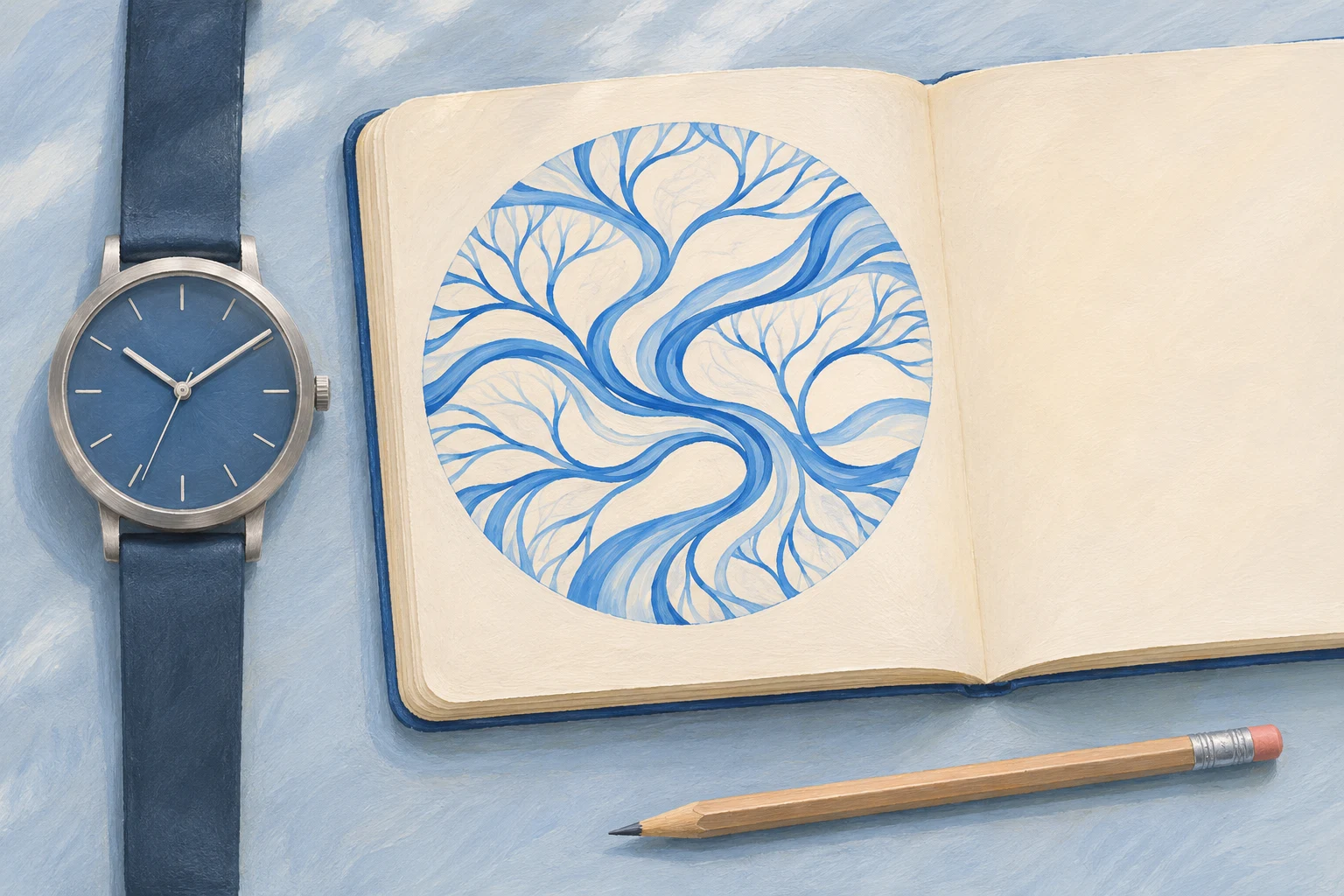
Keep questions about design and questions about performance specific. You can ask why a maker chose a motif without expecting that answer to establish accuracy, battery life or service requirements. Equally, a component name does not explain every decision about the complete watch. Those are useful distinctions for anyone who enjoys objects but is meeting watch terminology for the first time.
Give each part of origin its own meaning
Miyota describes itself as a movement manufacturer with production in Japan. That helps make a broader point about contemporary products: brand ownership, design inspiration, component manufacture and final assembly are different questions. A Botswana-owned brand can tell a Botswana story without that phrase, by itself, establishing where every part was produced.
Ask for a clear description if origin matters to your interest. Which contribution does a label identify, and which part of the object's journey remains to be explained? There is no need to treat an international component as cancelling local creative authorship. There is also no reason to turn a local brand name into an unsupported claim that all manufacturing took place in Botswana.
The useful outcome is a more precise appreciation of the object. A named entrepreneur, a landscape reference and a specialist component supplier can belong to the same account without becoming interchangeable contributions. That is a richer story than attaching a single country label and assuming it answers every question about how the watch came into being.
Let interest lead to a careful comparison
For a traveller, encountering the design should remain separate from deciding to buy it. Establish who is offering the particular model, what its current specification says and what service or guarantee is actually included. A dated announcement or social post can introduce a collection without reserving an item, confirming today's stock or proving the experience of an individual customer.
Take time to consider the practical object as well as its story. If an authorised seller can show you an example, ask about fit, readability, the supplied documentation and how future service would be arranged from where you live. Keep any questions about water exposure or care tied to the exact model's written instructions. A landscape associated with waterways does not establish how a watch should be used around water.
You can also leave the encounter without a transaction. A short note about the dial and reverse-side image may be enough to preserve what interested you. Describe the creator's stated references accurately, and distinguish them from your own response. That keeps a design conversation from becoming either an advertisement or an invented account of the product's making.
The Delta Flow example invites a specific way of looking at Botswana's contemporary visual culture. Landscape can enter a functional face, a mokoro can become a reverse-side motif, and a locally owned brand can work within an international world of components. Following those relationships gives a small object a larger context, while leaving the particular watch and its maker's account at the centre of the encounter.
Be the first to share a thought or travel tip.