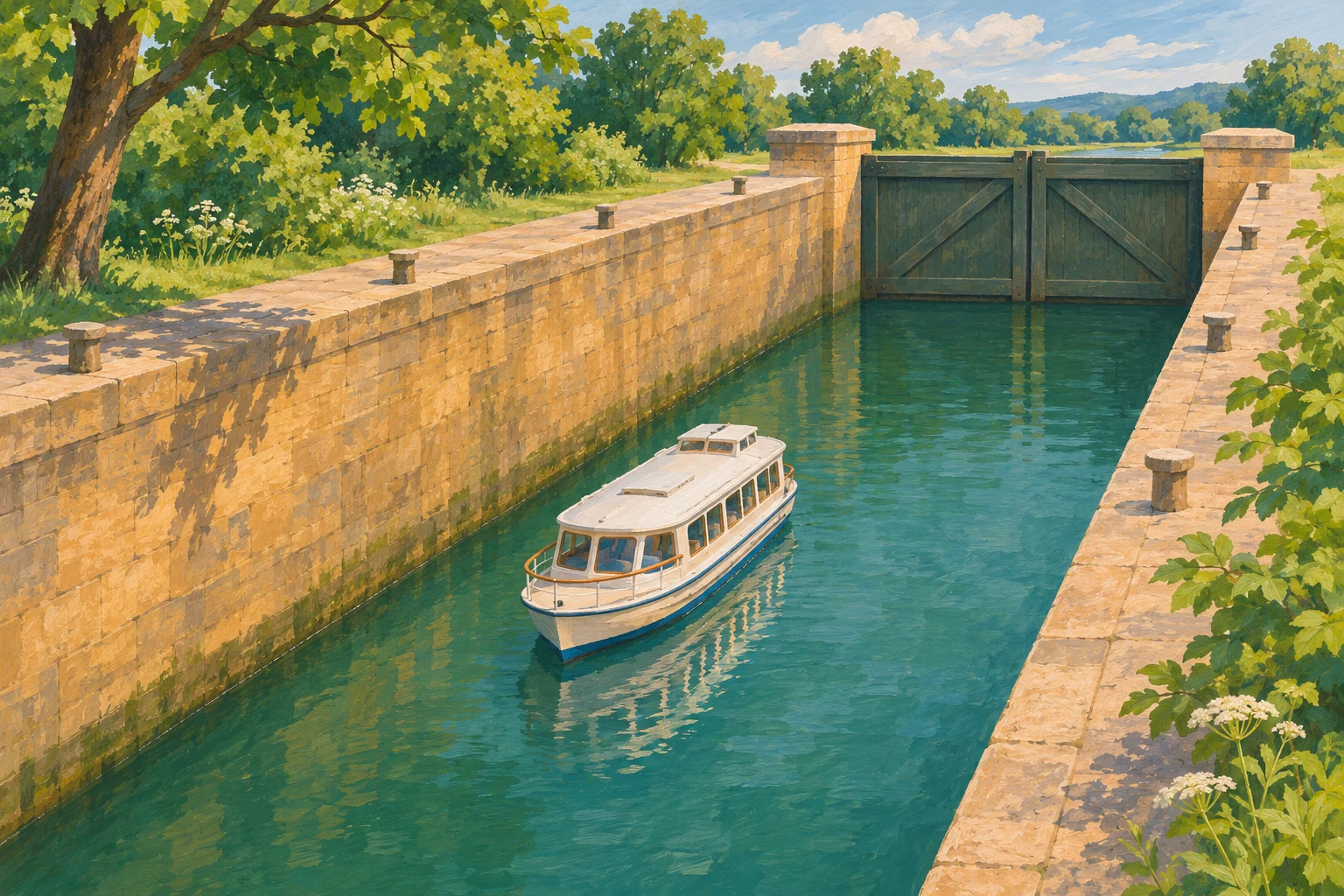
A river journey can become particularly interesting when the boat stops moving forward. Beside a lock wall, the view may change vertically instead: masonry rises above the windows, a bank comes back into sight, or an opening ahead gradually becomes the next stretch of the voyage. Understanding that pause adds another subject to a holiday usually described through towns, scenery and time ashore.
For a traveller from Botswana encountering a canal or a managed river abroad, the useful starting point is a simple distinction. The vessel is travelling through a landscape with changes in elevation. A conventional lock makes one of those changes possible by managing water within a chamber. Watching the process can be rewarding without taking any part in operating it.
Find the chamber within the wider waterway
The Canal & River Trust describes a lock as a gated chamber whose water can be raised or lowered. In its explanation of British canal locks, controlled openings called paddles admit or release water. The chamber is a particular enclosed space within the journey, rather than the whole canal changing level around the boat.
Look for that boundary before trying to interpret every visible fitting. A wall, gates and the water enclosed between them give you a manageable subject. What belongs to the chamber, and what belongs to the waterway beyond it? A photograph that includes both may be more useful for remembering the encounter than a close image of an unfamiliar piece of machinery.
The distinction also helps make sense of scale. An imposing wall can make a modest boat seem smaller, while the open water beyond may look almost ordinary. The structure is doing a particular job at a particular transition. It does not have to dominate the whole route to shape how the journey works.
Give yourself permission to begin with that broad view. Learning a name for every mechanism is less useful than recognising the space in which the change takes place. If an onboard explanation is available, use it to connect the visible parts with the chamber as a whole.
Follow the water before following the boat
Berks County's heritage explanation presents the two directions side by side. For a downstream passage, a boat enters and the gate closes behind it; releasing water lowers the level in the chamber before the exit gate opens. In the upstream example, water entering the enclosed chamber raises the level before the boat leaves. The vessel remains afloat through the change.
That gives a passenger a useful way to watch: choose a stationary feature on the wall and compare its position with the boat's window or deck. The boat can be changing elevation while remaining in much the same place horizontally. A scene that appears uneventful in a still photograph may be easier to understand through several observations made from the same permitted position.
Notice what your own viewpoint hides. From inside, the wall might occupy most of the view; from an authorised outdoor passenger area, more of the surroundings may be visible. Neither perspective needs to be treated as the complete picture. Compare what you can actually see with the explanation, and leave unseen parts of the process as questions.
This is a good subject for a short travel note. Record whether the vessel rose or fell and which feature helped you recognise the change. You are preserving an observation, rather than attempting to calculate the installation's dimensions from an uncertain angle.
Separate a gate from the route taken by water
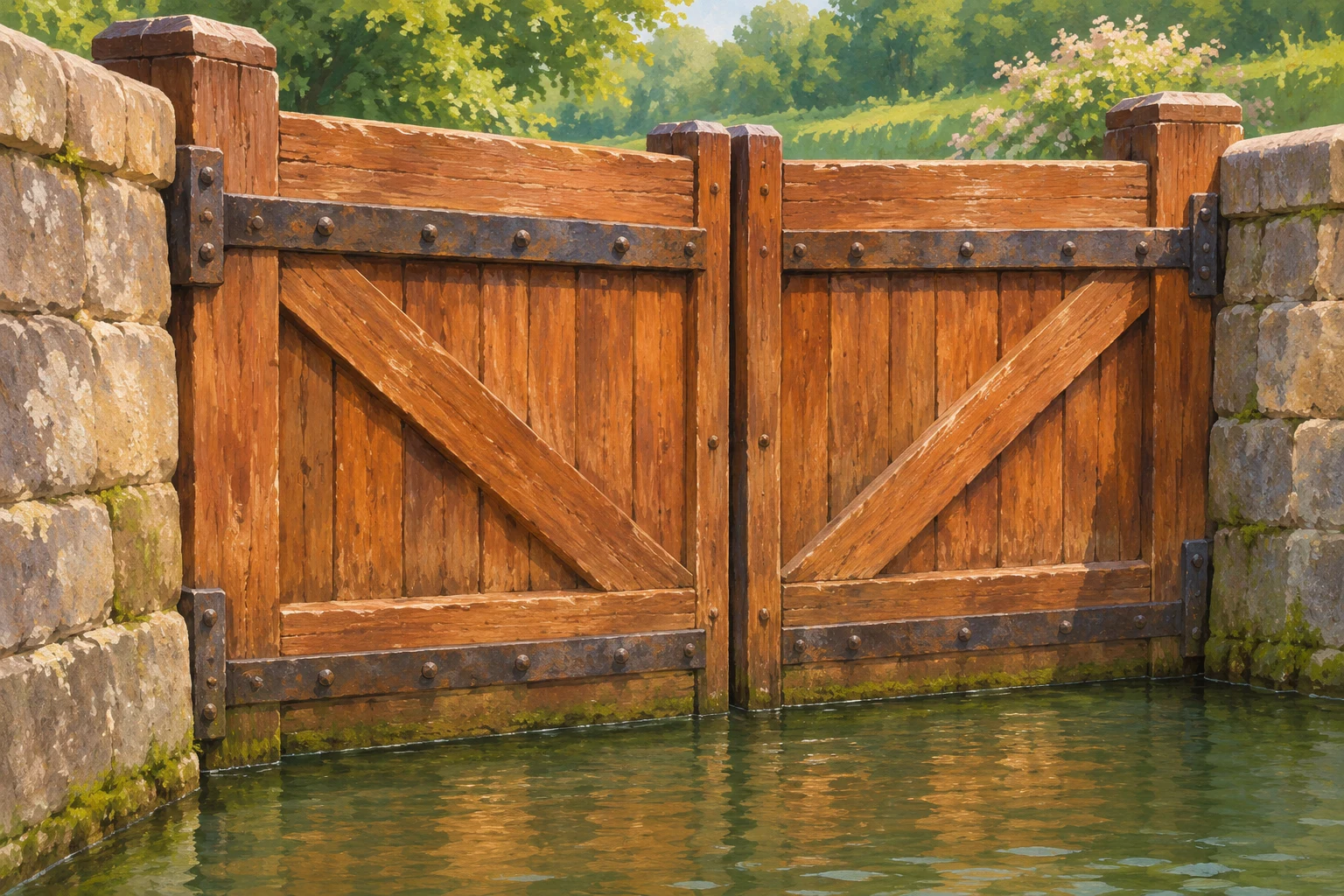
European Waterways' account distinguishes the large gates used for passage from the smaller controlled openings used to change the water level. Its description of paired mitre gates also explains why equalising the levels on either side matters before opening them. A gate's visible movement is therefore one stage of the process, rather than the whole explanation for the boat's change in height.
That relationship rewards patient attention. The most conspicuous object may be a large timber or steel surface, yet the change you are waiting for can happen while it remains closed. Look for the sequence in the explanation instead of expecting every important action to be a dramatic movement in front of you.
Ask a question after the manoeuvre, at a time the crew considers appropriate. Which parts of this installation control the water, and which provide the passage? The answer may reveal details that a general description cannot show. Keep the conversation separate from the crew's immediate work; a passenger's curiosity should fit around the operation.
Avoid using a single example to identify everything you meet later. Materials, mechanisms and scale can differ. Recognising the underlying relationship gives you a starting point for another encounter while leaving room for the particular structure to be explained on its own terms.
Read a series as part of the landscape
European Waterways distinguishes a flight of locks from a staircase arrangement. A flight uses a succession of chambers with stretches of water between them; in a staircase, neighbouring chambers share gates. Those are different ways of arranging repeated changes in level, even if a distant view makes both look like a line of similar structures.
For an observer, this changes the question from what one chamber does to how several are connected. Try describing the arrangement in ordinary words before reaching for an elaborate sketch. Is there open water between the structures you can see? Does the next chamber appear to begin immediately beyond the current one? An obscured view is a reason to ask, rather than to invent a connection.
A longer sequence also gives a canal journey a rhythm that a map can flatten. On paper, a short stretch may resemble the rest of the route. In experience, it can contain several deliberate transitions. Let that become part of your understanding of the landscape, rather than judging progress only by distance travelled since breakfast.
Enjoy the observation as a passenger
The Trust's boating guidance stresses that locks involve deep water, moving mechanisms and flows that need care. Its instructions are written for particular boating situations. On a crewed passenger journey, use the areas and movements the responsible team permits, keep clear of working equipment and follow the vessel's own instructions. An explanation read before a holiday does not qualify a guest to operate a lock.
If viewing the process matters to you, ask the operator whether the actual itinerary includes a suitable opportunity and what passengers can expect to see. Establish any access needs directly. A reference to locks in a route description does not promise an outdoor viewing place, a particular timing or an unobstructed view from every cabin.
Leave the exact duration open. A general illustration of the mechanism cannot tell you when your vessel will enter, how the day's traffic is being managed or whether an operational change will affect the route. Take practical arrangements from the crew rather than turning an interesting pause into a self-imposed appointment.
Once the vessel moves on, compare the scene with the view on arrival. The same boat has continued its journey from a different level. A modest piece of observation has connected scenery with infrastructure: the route is something people maintain and operate, as well as something passengers admire. That is enough to make a quiet interval between destinations a memorable part of the voyage.
Be the first to share a thought or travel tip.