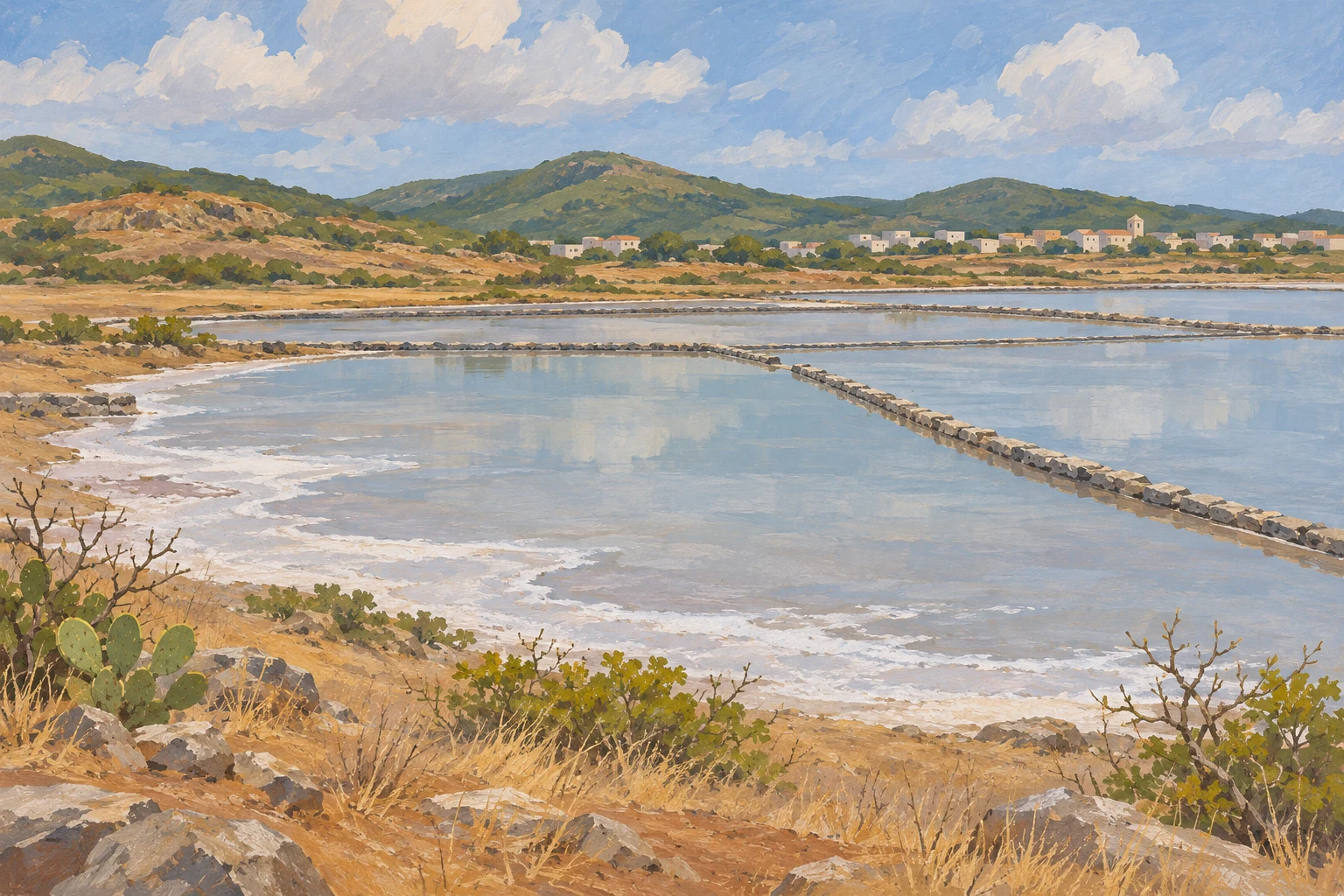
A Caribbean pond can be easy to admire and easy to misunderstand. Water, a pale shore and distant buildings may look like a quiet interval between beaches. Around Philipsburg on the Dutch side of Saint Martin, the Great Salt Pond introduces another way of reading the view: as a place connected with extraction, carrying, storage and trade, and with the people whose labour made those activities possible.
For a visitor from Botswana, this is a useful change of emphasis during an island holiday. The interesting question becomes how a landscape was used and how that history remains visible. You can pursue it through local interpretation and appropriate public viewpoints without treating a former working pond as open ground to explore wherever you please.
Locate the pond within the town's story
Visit St. Maarten's account places the Great Salt Pond beside Philipsburg and connects the pond's salt with trade through Great Bay. It describes a relationship between the shallow water, the harbour and the town, rather than presenting the pond as an isolated scenic attraction.
Begin with that relationship. When studying a local map or listening to a guide, distinguish the water body from the shore facilities and the route towards the bay. An industry involves movement between places as well as work at the point where material is obtained. The same landscape can therefore contain several different jobs, even when the equipment and buildings have changed.
A broad photograph may preserve those connections better than a tightly cropped image of water. Include enough of the surrounding setting to remember why the pond mattered to a town. Then describe what is actually visible and what you learned through interpretation. A distant wall or building should not acquire an invented historical purpose merely because it looks old.
The island has more than one salt pond. Keep the name and place attached to each account, particularly when comparing Dutch-side Philipsburg with a story from another community. A shared industry does not make every site or every worker's experience interchangeable.
Give the crystals a material history
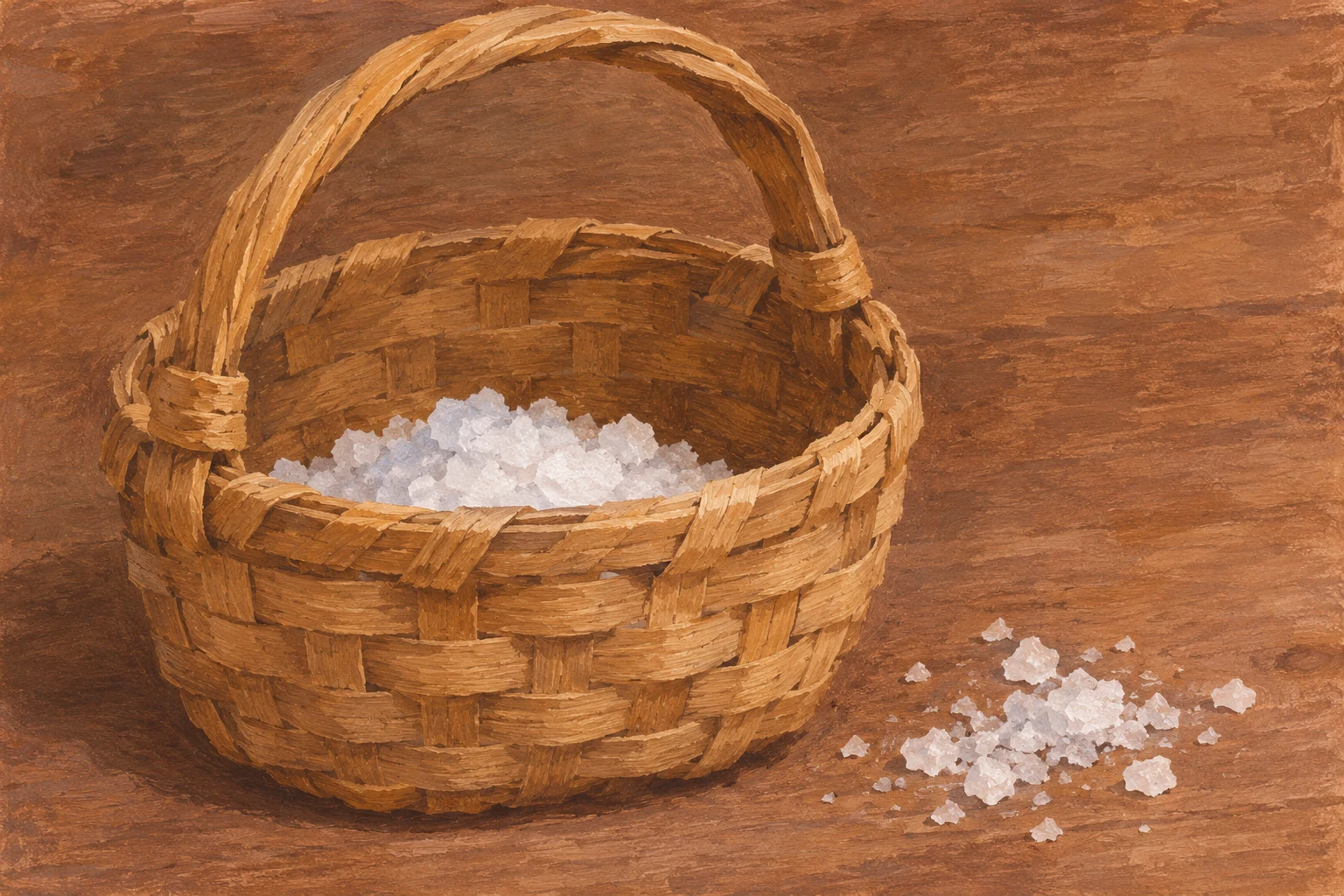
The Sint Maarten National Heritage Foundation and Museum explains salt formation through water evaporating in the sun and leaving crystals. Its account describes different historical ways of obtaining the salt, including gathering crystals from the pond and using stakes on which salt accumulated. The final material followed processes that people had to understand and work with.
That can change the attention given to an apparently familiar substance. The white crystals in a household container conceal the conditions and effort involved in producing them. A museum explanation brings some of that work back into view. It is a way to connect an ordinary material with a particular landscape, rather than simply adding an unfamiliar place name to something already known.
Look for the distinction between the material and the evidence used to explain it. An illustration may show a method, while a labelled object may preserve something from a particular period. Ask which you are encountering. Both can teach, but a reconstruction and an original object answer different questions about the past.
Learning the process is not an invitation to collect or taste material from a pond. Keep the encounter with the interpretation and the setting. The most useful result is a clearer understanding of what the salt represented in the working landscape, not a sample taken home without context.
Keep the workers in the picture
The museum's salt-industry account includes enslaved people and free workers, people of different ages and workers from both sides of the island. It describes demanding labour organised around different tasks. That history needs room in an account of the ponds; the beauty of the view should not erase coercion or make the work sound like a picturesque holiday activity.
Les Fruits de Mer's introduction to a recording published in July 2018 identifies Elise Hyman as someone who worked in salt production at Orient Bay in the middle of the previous century. Her named connection belongs to that location and period. It offers a personal entry into a wider history without making one person's experience stand for everybody who worked in the industry.
Seek interpretation that allows workers to be more than an anonymous background. Who is being named? Which task is being explained? Does the account identify when and where a memory belongs? These questions help keep a broad commercial history connected with individual lives, while avoiding an invented scene of what a person must have felt.
If a recording is available during your visit, give it the time its host recommends. Reading an introduction and listening to a complete account are different encounters. You can begin with a short description without claiming to have heard every memory it introduces.
Follow the journey from pond to shipment
The visitor account links salt extraction with storage near Philipsburg's Courthouse and shipment from the location now associated with Captain Hodge Pier. It also identifies the Salt-pickers Monument as a reminder of the work. These connections make the history larger than the surface from which salt was obtained.
Consider the sequence as a set of questions to take into a museum or guided walk. How was material gathered together? Where did it wait? How did it reach a vessel? A familiar town feature may become more interesting when it is connected with movement and work, rather than treated only as a place to pause for a photograph.
Do not assume every stage remains visible or publicly accessible. A present-day building can have a new purpose, and a historical location can survive primarily through records and interpretation. Let the available evidence establish what can be described. An accurate account of a missing stage is more useful than attaching an attractive but unrelated object to the story.
This also gives a modest outing a clearer purpose. You need not collect every monument or cross the whole island to understand one relationship well. A carefully interpreted connection between pond, town and bay can be more memorable than a long list of names whose links remain unexplained.
Read the changed landscape with care
Visit St. Maarten describes parts of the Great Salt Pond being filled as Philipsburg expanded, and notes that the name Pondfill Road recalls that change. Today's outline should therefore not be treated as a complete picture of the historical working area. A present view and a historical account can concern different stages of the same landscape.
Compare a dated map or photograph only within the explanation supplied with it. Look for what has changed and what remains uncertain from your own viewpoint. Do not turn a visual comparison into an estimate of an exact lost area or an assertion about present environmental conditions. The interest lies in recognising change without pretending that a brief visit measures it completely.
Before planning a museum stop, confirm current opening arrangements and the subjects actually available to visitors. Use recognised public routes and viewpoints, and ask locally about access where necessary. A description of former salt work does not establish a safe route across a pond, an invitation into ruins or a public path along every edge.
The reward is a fuller island memory. Water and shore can remain beautiful while also carrying a history of work, trade, unequal power and remembered lives. Looking for those relationships allows Saint Martin's salt ponds to become part of understanding the place, rather than simply another quiet scene passed between the better-known stops.
Be the first to share a thought or travel tip.