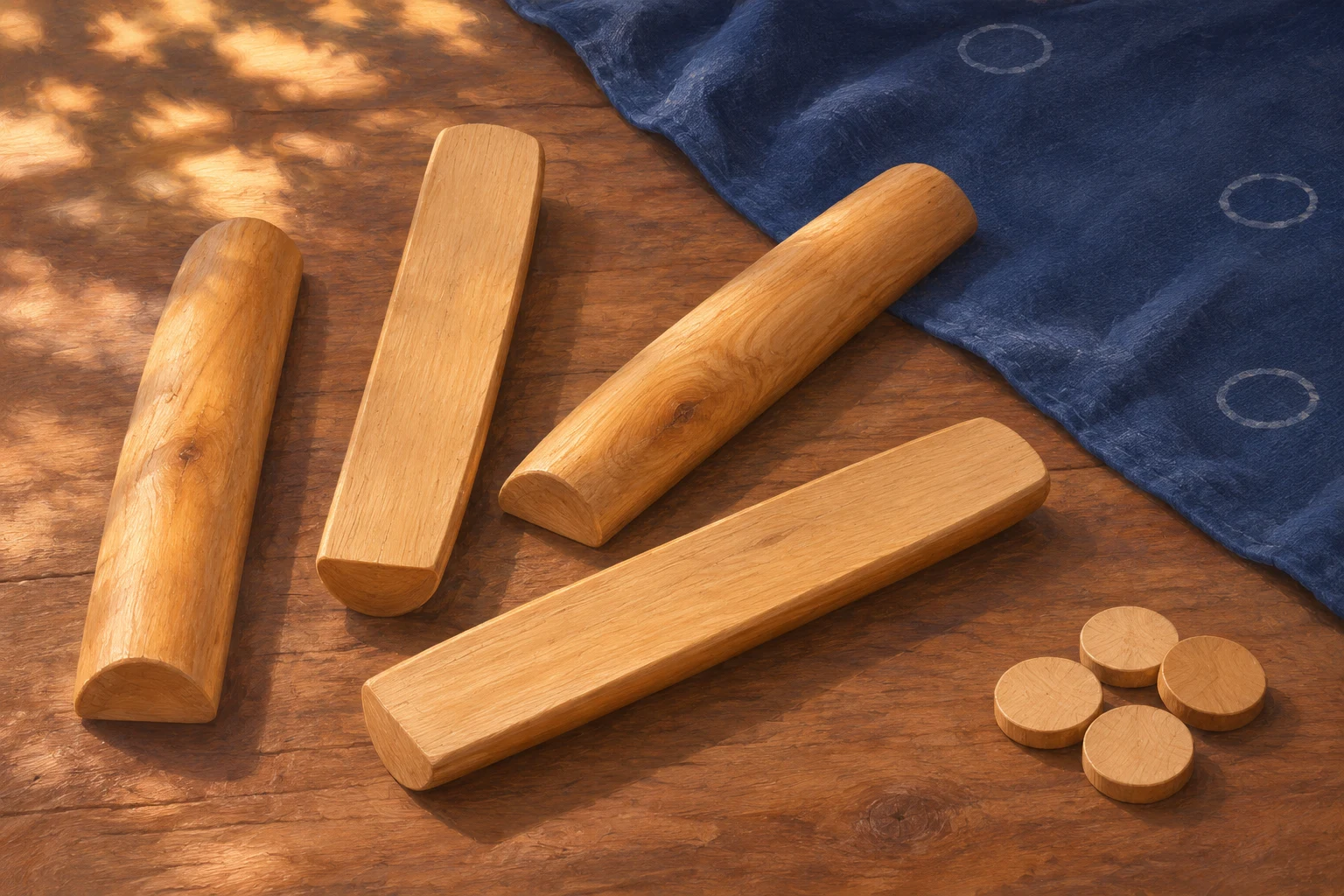
Four wooden sticks land, the group reads the result and a playing piece moves. It is an appealingly small sequence, but it does not make yutnori a game without decisions. The throw supplies an outcome; the players still have to decide what to do with the position in front of them. That meeting of chance, movement and conversation makes the Korean game an interesting cultural encounter.
For a traveller from Botswana exploring Korean New Year traditions, yutnori offers a focus more manageable than trying to understand an entire festival at once. You can learn to read a throw, follow a piece around the board and notice how teammates discuss a choice. The equipment introduces the game, while the people sharing it give the encounter its particular character.
Learn what the sticks are telling you
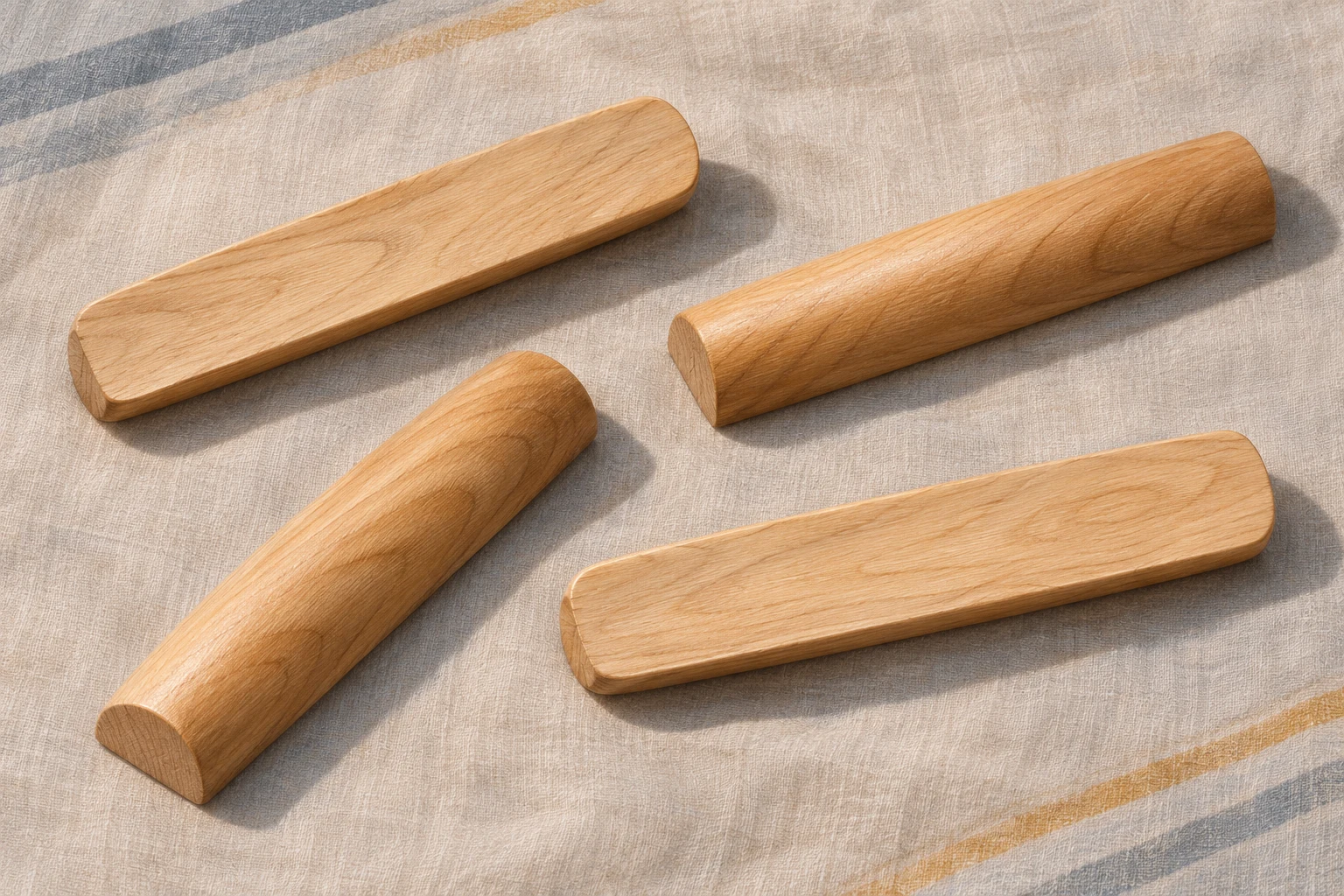
The Academy of Korean Studies describes yutnori as a game in which teams move four pieces according to the landing of four wooden sticks. The sticks perform the role that dice have in many other games, but the result is read through the combination of their two sides rather than dots on a cube. A newcomer needs to learn that reading before the board's possibilities become clear.
Begin with the actual set and explanation being offered. Ask the teacher to show a few settled throws, leaving the sticks still while you match the result to its movement value. Counting the faces and naming the outcome are related tasks, but they are not identical. Watching someone read a familiar result quickly can hide the step that a beginner most needs to understand.
Do not assume that similar-looking wooden objects behave like perfectly balanced dice. The useful first lesson is the agreed scoring system, rather than a claim that every possible landing is equally likely. A few practice throws can make the equipment less mysterious without becoming an experiment about its probabilities. Once you can follow the result, let an ordinary round show how that result changes the board.
Separate the throw from the choice of piece
A movement value does not necessarily decide which piece should move. With several pieces in play, a player can consider bringing another onto the board or advancing one already on its journey. The University of Chicago Library's teaching guide makes those options explicit. It also describes an objective of bringing all four pieces home, rather than treating the first successful arrival as the end of every version.
This is where watching one turn slowly becomes useful. Ask what choices are available before somebody moves. One piece may be close to completing its journey, while another remains exposed to an opponent. The same throw can therefore belong to different plans. You do not need to predict a long chain of future moves to recognise that the immediate result and the best use of it are separate questions.
Keep a practice explanation distinct from competitive play. Resetting a position to compare two choices can help during a lesson, while it may be unwelcome in a match already underway. Agree when advice and discussion are part of the round. That small agreement makes space for learning without asking experienced players to interrupt every turn to reconstruct an explanation.
Notice how joining pieces changes the risk
The library guide describes allied pieces sharing a position and moving together. It also explains capture: landing on an opposing piece sends that piece back, with an extra turn for the capturing player. When pieces are grouped, their shared movement can be attractive, but the group can also share the consequence of being caught.
Think about what that changes. Moving several pieces as a group can make one successful advance matter more. It can also make a setback affect more than one piece. The interesting choice is not simply whether a large group looks powerful. It is how that group sits in relation to the other pieces and the possibilities the next throws may create.
Give teammates room to explain their reasoning if they wish. A player favouring progress and another favouring a capture may be noticing different parts of the same position. Listening to that disagreement can reveal more than a quick announcement of the move eventually selected. Keep your account tied to the round you observed; one lively discussion does not establish how every Korean family plays or makes decisions.
Put the game beside its seasonal setting
The Academy's account places yutnori within the opening part of the lunar year and discusses its historical connection with hopes for agricultural fortune. That context explains why a game can carry more than the immediate aim of beating the other team. It records a cultural relationship between play, the calendar and a community's concerns, rather than evidence that a throw can predict a harvest.
The same equipment can also appear in an organised cultural introduction. The Korean Cultural Centre UK advertised a yutnori session within its April 2025 traditional-games programme. That dated example shows the game being presented to newcomers outside Korea. It does not turn a past workshop into a current booking or establish that every future programme uses identical rules.
For a visitor, the setting changes what participation means. A public lesson has a teacher and an agreed purpose; a family holiday gathering belongs to its hosts. An invitation to learn a game does not automatically extend to every observance around it. Enjoy what is shared and let the people organising the occasion decide how much explanation or participation fits their gathering.
Agree the version before trying to win
Published teaching accounts can differ in the details they emphasise. Before beginning, establish how many pieces each team uses, which results earn another throw, what happens after a capture and what counts as finishing. If a marked stick or an additional rule is included, have it explained with the equipment in front of you. A familiar name cannot settle all of those details by itself.
Choose a modest aim for the first round. Being able to read the throws and follow the movement is a worthwhile beginning. Strategy can grow from the positions that actually arise, especially when a host is willing to explain one choice. There is no need to turn a cultural visit into a test of who can memorise the longest rule list or offer the most confident correction.
If you would like an organised experience during a trip, confirm the current programme and participation arrangements with its organiser. Keep that enquiry separate from a general description of Korean holiday traditions. A small, well-arranged session can be enough: four sticks, a board and a conversation that makes the next move more interesting. Yutnori rewards attention to both the uncertain throw and the shared decisions that follow it.
Be the first to share a thought or travel tip.